
The cheapest ATMs in Peru for foreign cards are Banco de la Nación’s MultiRed machines, which usually charge no local fee (with a limit of about S/ 400 per withdrawal). Most other bank ATMs, including BCP, BBVA, Interbank, Scotiabank and the GlobalNet network, add a surcharge of roughly S/ 15 to S/ 36 (about US$4 to $10) per withdrawal as of November 2026, on top of anything your own bank charges.
Peru ATM Fees and Limits at a Glance
Peruvian banks rarely publish what they charge foreign cards, so the figures below are ranges from recent traveler reports and fee trackers, checked November 2026. Fees change often and can vary from machine to machine. The exact fee always appears on the screen before you confirm the withdrawal, and you can cancel at that point.
| Bank / network | Typical fee for foreign cards | Max per withdrawal | US dollars? |
|---|---|---|---|
| Banco de la Nación (MultiRed) | Usually no fee (occasional reports of a charge) | About S/ 400 | Don’t count on it |
| BCP | Mixed: no fee reported with some cards, otherwise about S/ 15–36 | About S/ 700 | At some machines |
| BBVA | About S/ 18–25 | About S/ 400 | At many machines |
| Interbank | About S/ 14–25 | About S/ 400 | At some machines |
| Scotiabank | About S/ 18–28 (may be waived for Global ATM Alliance cards) | About S/ 400 | At some machines |
| GlobalNet (Interbank’s ATM network) | About S/ 15–36 | About S/ 400–700 | At some machines |
| BanBif | About S/ 18–20 (reports vary) | About S/ 700 | Varies |
Sources include How to Peru, ATM Fee Saver and Travel Currency Guide. Treat all figures as approximate.
What Is MultiRed?
MultiRed is the ATM network of Banco de la Nación, Peru’s state-owned bank. You’ll see the MultiRed name on its machines, which are found in most cities and towns. Banco de la Nación is also often the only bank in smaller provincial towns, so its ATMs can be the only option outside the main tourist centers.
The reason travelers look for MultiRed is the fee: as of November 2026, traveler reports and fee trackers consistently say these ATMs don’t add a local surcharge for foreign cards. There are occasional reports of a fee, so check the screen anyway. The downsides are a low limit of about S/ 400 per withdrawal, occasional queues (many Peruvians use these machines too), and machines that sometimes run out of cash. Some travelers report that one card works when another doesn’t, so it’s worth carrying a backup card on a different network (Visa and Mastercard).
What Is the Best ATM to Use in Peru?
For most travelers, the answer is:
- Banco de la Nación (MultiRed) if you want to avoid the local fee and don’t mind the S/ 400 limit.
- A bank with a higher limit if you need a bigger amount. A S/ 25 fee on S/ 400 is about 6% of what you take out; the same fee on S/ 700 is about 3.6%. BCP and BanBif machines typically allow around S/ 700 per withdrawal.
- Scotiabank if your home bank belongs to the Global ATM Alliance (Bank of America in the US, for example), as Scotiabank is a member and the local fee may be waived. Check with your bank first.
Whichever machine you use, decline the currency conversion offer (see below) and make fewer, larger withdrawals rather than lots of small ones. For more ways to keep costs down, see our tips for traveling in Peru on a budget.
Decline the Currency Conversion
Some ATMs, especially GlobalNet machines, offer to charge your withdrawal in your home currency at a “guaranteed” rate. This is called dynamic currency conversion, and the rate is usually worse than the one your card network would give you. Always choose to be charged in soles (look for options such as “sin conversión” or “moneda local”). If you’re not sure which button declines the conversion, cancel and start again.
Where Can I Find ATMs in Peru?
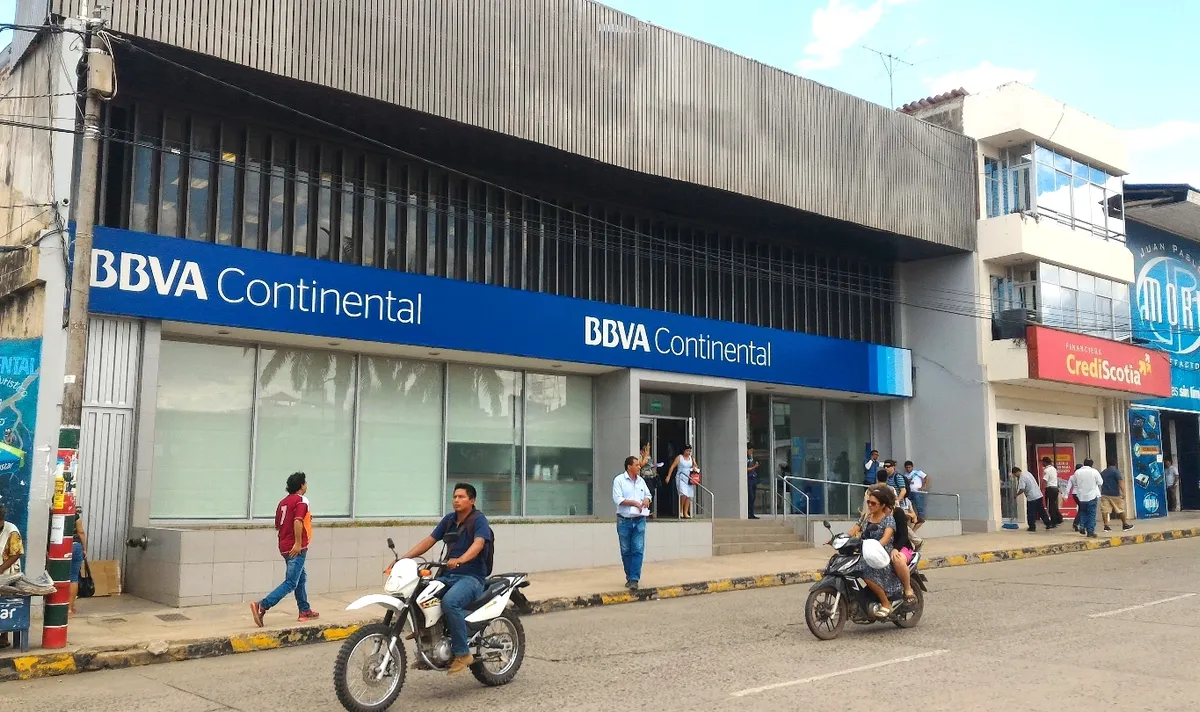
It’s normally easy to find an ATM in any large city in Peru, especially if you’re in the city center. The city’s main square, or Plaza de Armas, is normally a good place to start. If you don’t find an ATM around the square itself, then there should be one on an adjacent street. Also keep an eye out for any banks, as most have ATMs inside (such as shown in the main image above). If your Spanish is up to it, then of course you can always ask a local for directions to the nearest cajero automático.
While most mid-sized towns will have an ATM or two, some smaller towns — and especially villages — might not have any at all. Before heading out to any village or rural community, always make sure you’ve got enough cash on you for the trip (and some extra for emergencies).
Large shopping malls and some pharmacies also contain ATMs. If you’re flying into Lima, you’ll find ATMs inside Lima Airport.
Most ATMs are open 24 hours a day.
What Cards do Peruvian ATMs Accept?
ATMs in Peru typically accept Visa and Mastercard, and many also take American Express. Visa is the most widely accepted.
Make sure you tell your bank you’re traveling, or your card may be blocked by its anti-fraud systems. If your card does become blocked, you should be able to unblock it fairly quickly by contacting your bank back home.
Some ATMs will refuse to give you money for other reasons, so don’t panic if your withdrawal is refused. The machine might be out of money or the local network could be down temporarily. Try another bank’s machine or try again later; if the problem persists, call your bank.
Is There a Daily Withdrawal Limit?
Peruvian ATMs limit how much cash you can withdraw in one go, and the limit is sometimes frustratingly low: as of November 2026, roughly S/ 400 per withdrawal is standard at most machines (including BBVA, Interbank, Scotiabank and Banco de la Nación), while BCP and BanBif machines typically allow around S/ 700. Some banks reduce the amount at night. The same limits apply when withdrawing dollars, converted at the bank’s rate.
Daily limits also apply, so while you should be able to make a few withdrawals in one day, don’t be surprised if you hit a wall eventually. Exact daily caps vary by bank and change often. Your bank back home may also set its own daily limit, so check with them before traveling.
ATM Fees from Your Bank Back Home
The Peruvian surcharge is only half the story. Your own bank may charge a fixed fee for using an ATM abroad and a foreign transaction fee (often a percentage) on top. Some banks and travel-focused cards charge no foreign fees, and a few refund ATM surcharges, so it’s worth checking before you go.
So if you are being charged more than you expected, the fees might be coming from both your bank and the bank in Peru. Check with your bank before you travel, and look at your statement after your first withdrawal. It’s handy to have online banking set up so you can check your balance, and any fees you’re paying, from Peru.
Another option for larger amounts is a money transfer service with cash pickup in Peru, such as Xoom. Compare the total cost (fee plus exchange rate) with what you’d pay at an ATM.
What Currencies Can I Withdraw and in What Denominations?
Many ATMs let you withdraw both Peruvian soles and US dollars. If a machine can dispense dollars, it will offer the option on screen. For everyday spending, soles are more useful; see our guide to using US dollars in Peru for when dollars make sense.
When you withdraw soles, you’ll normally receive S/ 100 notes, which can be awkward, as small shops, taxis and market stalls often can’t change them. Sometimes the machine will give you S/ 50 notes, or even a few S/ 20 notes. Break big notes in supermarkets or larger shops, and keep small change for things like tipping in Peru.
When you withdraw US dollars, you’ll typically receive $20 notes.
Are Peruvian ATMs Hard to Use if I Don’t Speak Spanish?
In a word: no. Most ATMs in Peru have an English-language option. This option should appear once you’ve inserted your card.
Is it Safe to Use ATMs in Peru?
Generally yes, if you take some sensible precautions:
- Use ATMs inside banks, malls or supermarkets whenever possible. Many bank branches have ATMs in an enclosed area, which greatly reduces the risk of snatch theft.
- Withdraw during the day when there are people around. Be more careful at street ATMs, especially at night.
- Cover the keypad when you enter your PIN, and check the card slot for anything that looks loose or added on. If you see anything dubious, use a different machine.
- Don’t accept help from strangers at the ATM, even if your card seems stuck. Call the number on the machine or your bank instead.
- Put your cash away before you leave the machine, ideally in a zipped or hidden pocket, and don’t count it in the street.
In Lima, it’s worth knowing the most dangerous areas of the city before you go looking for an ATM. For more practical advice, see our list of things to know before you go to Peru.
Can Peruvian ATMs Give Out Fake Money?
There are stories of people receiving fake money from legitimate ATMs in Peru. I’ve withdrawn money from ATMs all across the country for many years and have never received a fake note, so the chances are very low. If you’re worried, use an ATM inside a bank during opening hours: if anything looks wrong, you can take it straight to the teller.
Frequently Asked Questions
Should I bring cash or use ATMs in Peru?
Both. Bring some cash (US dollars in good condition are easy to exchange) for your first day or two, and then use ATMs for the rest. Cards are accepted in many hotels, restaurants and larger shops in cities, but you’ll need cash for markets, small shops, local transport and rural areas.
How much does it cost to withdraw money in Peru?
As of November 2026, expect roughly S/ 15 to S/ 36 per withdrawal at most bank ATMs, and usually nothing at Banco de la Nación (MultiRed), plus whatever your own bank charges. Check the fee on screen before you confirm.
All photos by Tony Dunnell.