
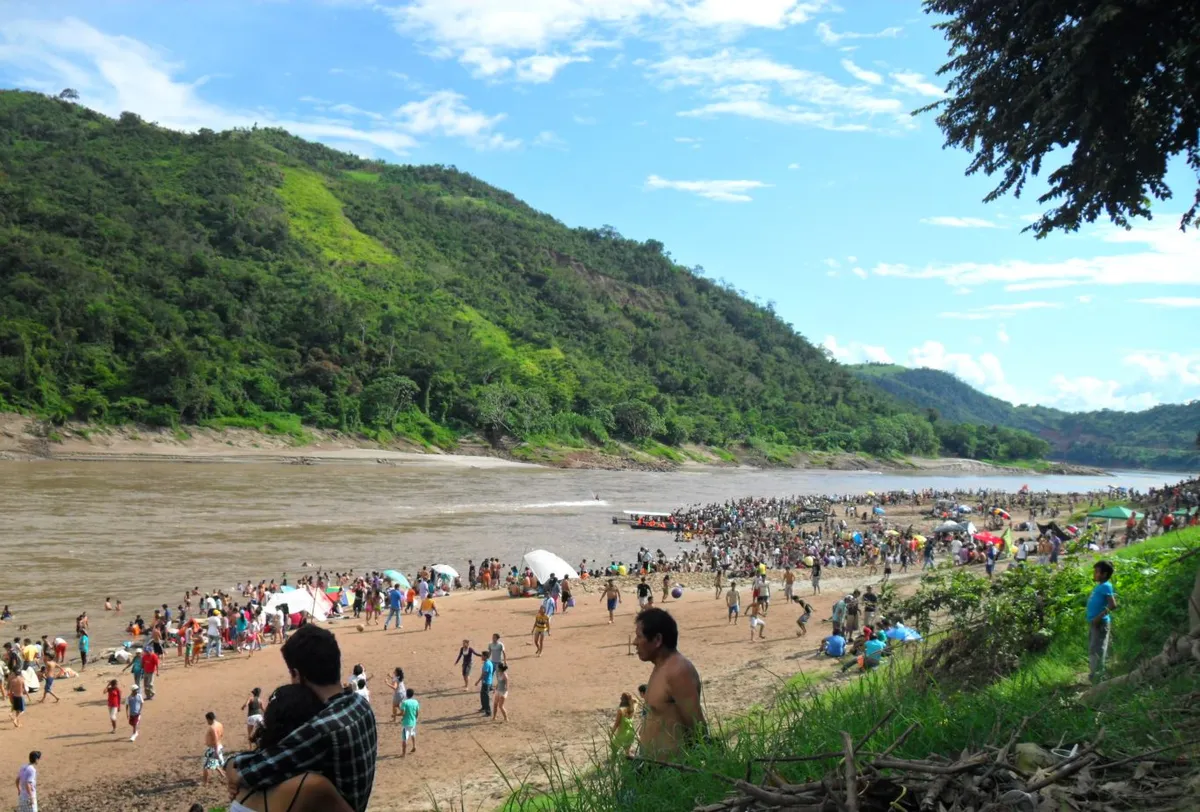
Yes, Peruvians are both Hispanic and Latino as those terms are used in the United States. Peru is a Spanish-speaking country in South America, which fits the US Census Bureau’s definition of Hispanic or Latino. Hispanic or Latino is an origin, not a race, and Peruvians have a wide mix of ancestry: many are mestizo, and millions identify as Quechua, Aymara, Amazonian Indigenous, white, Afro-Peruvian or of Asian descent.
Are Peruvians Hispanic or Latino?
In the United States, the Census Bureau follows the federal (OMB) standard, which defines Hispanic or Latino as “a person of Cuban, Mexican, Puerto Rican, South or Central American, or other Spanish culture or origin regardless of race” (US Census Bureau, checked November 2026). OMB updated its race and ethnicity standards in March 2024, but Hispanic or Latino remains a category, and people of Peruvian origin fall within it.
- Hispanic is usually understood as relating to Spanish-speaking countries and cultures. Spanish is the first language of most Peruvians.
- Latino (or Latina) relates to Latin America. Peru is in South America, so Peruvians are Latino.
- Neither is a race. A Peruvian can be Hispanic or Latino and also Indigenous, white, Black, Asian or mixed.
Spanish isn’t Peru’s only language. Quechua, Aymara and other Indigenous languages are also official where they predominate, and Quechua is spoken by several million Peruvians, mainly in the Andes. Some Peruvians of Indigenous heritage, especially Quechua and Aymara speakers, may identify primarily with their Indigenous community rather than with “Hispanic.” How any individual describes themselves is up to them.
Inside Peru, the question rarely comes up. Peruvians tend to describe themselves as Peruvian (peruano or peruana; see what people from Peru are called) and, more broadly, as South American or Latin American. “Hispanic” and “Latino” are mostly US labels.
How Do Peruvians Identify? (2025 Census)
Peru’s census asks people to self-identify by “customs and ancestors.” The first results of the 2025 census, published by INEI in 2026, were:
| Self-identification (2025 census) | Share |
|---|---|
| Mestizo | 61.8% |
| Quechua | 17.2% |
| White (blanco) | 9% |
| Afro-Peruvian (negro, moreno, zambo, mulato, afroperuano or afrodescendiente) | 6% |
| Aymara | 2% |
| Amazonian Indigenous peoples | 1.6% |
| Other | 2.1% |
Figures as reported in Peruvian press coverage of the INEI results; they don’t add to exactly 100% because of rounding and categories not listed. In total, close to 9 million Peruvians identified as part of an Indigenous people or as Afro-Peruvian.
More Questions About Peruvians
When you type a phrase into Google, it suggests searches based on what other people commonly ask. The questions below come from typing “Are Peruvians…” into Google, originally in May 2017. Some are serious, some less so. The answers that follow are generalizations; Peru is a country of more than 34 million people, and individuals vary.
Are Peruvians Asian or Part-Asian?
Peruvians are not Asian as a nationality, but Peru has long-established Chinese-Peruvian (tusán) and Japanese-Peruvian (nikkei) communities, dating from immigration that began in the 19th century. Only a small share of Peruvians (well under 1% in the 2017 census) identify primarily as nikkei or tusán, but many more have some Asian ancestry, and Chinese-Peruvian chifa cooking and Japanese-Peruvian Nikkei cuisine are part of everyday Peruvian food.
Are Peruvians white?
Peru is a multiethnic nation, with a mix of Indigenous peoples, a colonial history and plenty of immigration (including from Europe, Africa and Asia). The census asks about ethnic self-identification rather than race: in the 2025 census, 9% of Peruvians identified as white, while most (61.8%) identified as mestizo, of mixed Indigenous and European descent (see the table above).
Are Peruvians black?
Most Peruvians do not identify as Black, but Peru has long-standing Afro-Peruvian communities, descended largely from Africans brought to Peru as enslaved people during the colonial era. In the 2025 census, 6% identified as Afro-Peruvian or Afro-descendant (including the terms negro, moreno, zambo and mulato), up from 3.6% in 2017. Afro-Peruvian culture is especially visible on the southern coast, in places such as El Carmen near Chincha.
Are Peruvians Spanish?
No. They’re Peruvian. Peru was under Spanish colonial rule from the 1530s until it declared independence on July 28, 1821 (independence was secured in 1824), which is why Spanish is the main language.
Are Peruvians Indian?
Not in the sense of being from India. There are Indigenous Peruvians, including Quechua, Aymara and many Amazonian peoples. And while you could refer to them as native Americans, which isn’t strictly incorrect, the term Native American typically refers to the indigenous people of the United States (see below). But if you refer to indigenous Peruvians as indios, or “Indians,” you’ll sound like a Spanish explorer from the 1500s. And that’s probably not a good thing.
Are Peruvians short?
On average, yes. The best international comparison comes from the NCD Risk Factor Collaboration (NCD-RisC), whose estimates for young adults born in 1996 put the average Peruvian man at about 165 cm (5 feet 5 inches) and the average Peruvian woman at about 153 cm (5 feet 0 inches) (data via Our World in Data). That’s among the shortest averages in South America, slightly shorter than Bolivia and Ecuador.
For comparison, the same estimates put the average Dutch man, the tallest in the world, at about 182.5 cm (just under 6 feet), and the average US man at about 177 cm (5 feet 9.7 inches). Averages hide a lot of variation, and average height in Peru also differs by region and has risen over the past century with better nutrition. If you want to know the science behind the shortness of Peruvians, read this report about a 2018 study that found a specific gene variant that might account for Peruvian shortness.
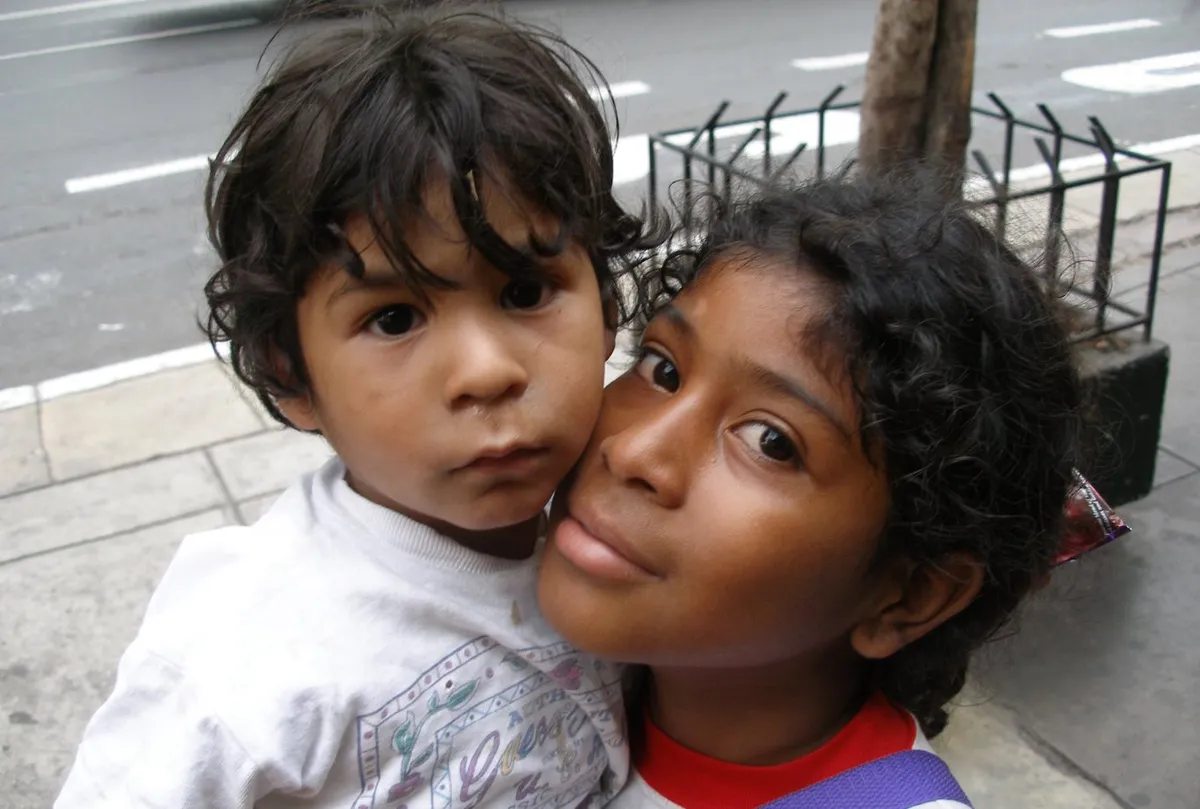
Peruvian children on the streets of Lima. Photo by Thomas Quine, flickr.com.
More Google Questions About Peruvians: A to Z
Are Peruvians attractive?
Sorry, but this one is far too subjective to answer. The physical characteristics of Peruvians also change on a regional basis, so you might find yourself falling in love every half hour in the jungle, and just once a month in the highlands. Or vice versa.
Are Peruvians arrogant?
I say no to this one. You get some arrogant Peruvians, of course, but that’s the same in any country. Speaking very generally, I reckon there’s a higher percentage of arrogant people in the United Kingdom (my home turf) than in Peru.
Are Peruvians good in bed?
Ahem. Um, are Peruvians good in bed? I, erm, I think I’ll call privacy clause on that one.
Are Peruvians circumcised?
Circumcision is relatively uncommon in most of Europe and Latin America, while almost universal in the Muslim world and common in the United States. World Health Organization estimates place Peru among the countries where fewer than 20% of men are circumcised.
Are Peruvians Catholic?
The majority of Peruvians are Catholic. In the 2017 census (people aged 12 and over), 76% said they were Catholic, 14.1% evangelical, 4.8% another religion and 5.1% no religion.
Are Peruvians crazy?
While I have met some crazy Peruvians, I’ll say that no, most Peruvians are not crazy in any kind of clinical sense.
Are Peruvians cheap?
I’m guessing that’s “cheap” as in “they don’t like to spend money” or “stingy.” In which case… um… I’ll say no. There are also pure economic considerations here: INEI estimated that 25.7% of Peruvians lived in monetary poverty in 2025, which can make “cheap” living a matter of necessity, not choice.
Are Peruvians dumb /stupid / smart?
No nationality or race is inherently dumb. Peruvians are not dumb. Unfortunately, the Peruvian education system is not great. Peru ranked last of 65 countries in the 2012 round of the OECD Programme for International Student Assessment (PISA). Its scores have improved since, but in the most recent rounds it was still well below the OECD average in math, reading and science.
Are Peruvians friendly?
Peruvians range from incredibly friendly to forlorn and reserved. From my experience, Peruvians in or from the jungle regions are the friendliest. But there’s always going to be a huge caveat when it comes to perceptions of friendliness: if you’re rude, people are more likely to be rude back. So a lot depends on you.
Are Peruvians happy?
Yes, apart from the miserable ones.
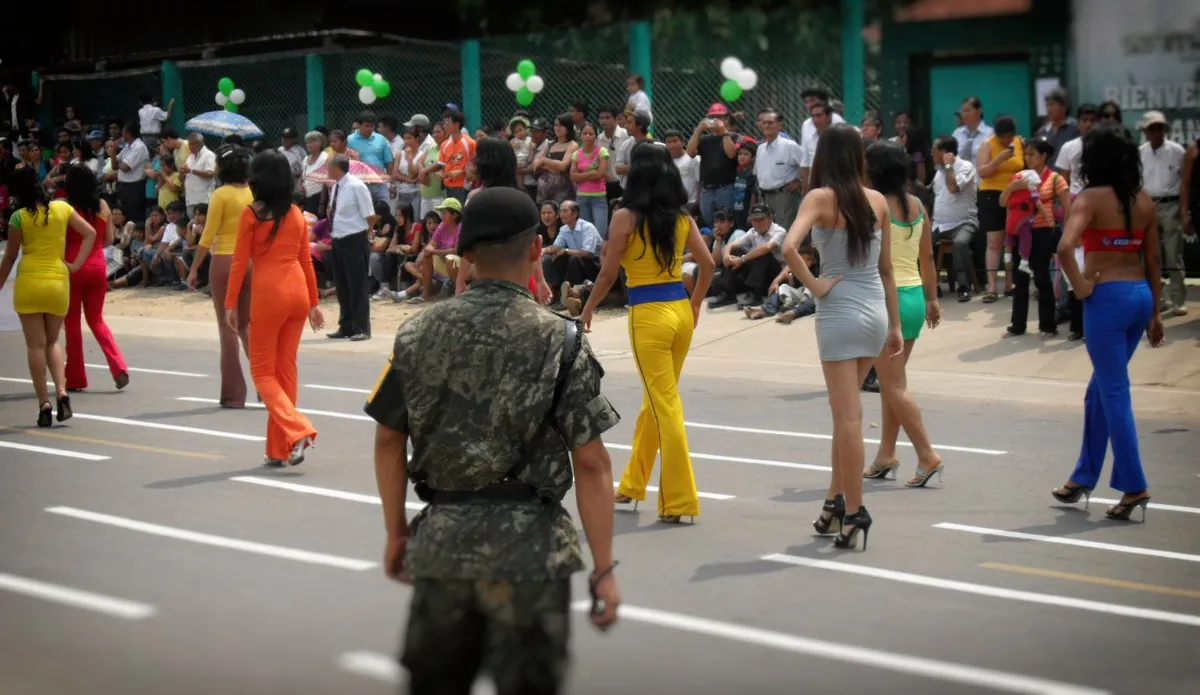
This Peruvian soldier seems a little distracted by something. Photo by Tony Dunnell.
Are Peruvians Inca?
As mentioned above (Are Peruvians White?), Peru is a multiethnic country. In the 2025 census, about 17% of Peruvians identified as Quechua and 2% as Aymara, and 61.8% as mestizo, of mixed Indigenous and European descent. The Inca Empire was ruled by a Quechua-speaking elite and incorporated many other Andean peoples, so while no one today is “Inca” as such, a large share of Peruvians have Andean Indigenous ancestry.
Are Peruvians jealous?
No more or less than anyone else. Jealousy is a personal trait, not a national one.
Are Peruvians lazy?
No. Many Peruvians work long hours, often in the informal economy, and in the Amazon the heat and humidity shape the pace of the working day more than anyone’s character does.
Are Peruvians Mayans?
Nope. You need to head north to Central America and Mexico for Mayans.
Are Peruvians Mexican?
I’m assuming curious five-year-olds are the reason for the frequency of this particular Google query. Peruvians are not Mexican. Mexicans are Mexican. Burritos are Mexican. Speedy Gonzalez is Mexican. Peruvians are Peruvian.
Are Peruvians mean?
Oooo, those mean Peruvians! I don’t think the average Peruvian is any meaner than anyone else on this planet. Of course, you can find a few examples of meanness. They haven’t banned bullfighting or cockfighting. Some of them tie condors to the backs of bulls. They love to run over each other in cars, especially in Lima. But in the UK we still argue about tearing foxes to pieces and we love to mock the French, so I guess we’re all a bit mean.
Are Peruvians Native American?
As mentioned above, indigenous Peruvians are native to the Americas. But the term Native American typically refers to the indigenous peoples of the United States. People native to Peru are more commonly referred to as the indigenous peoples of Peru (or, more widely, of the Americas).
Are Peruvians obese?
Obesity has been rising in Peru. According to INEI’s ENDES 2024 health survey, as reported by Peru’s Ministry of Health, about 25.7% of people aged 15 and over are obese and about 62% are overweight or obese. For comparison, the US CDC puts adult obesity in the United States at about 40%.
Are Peruvians racist?
Big question. I’m going to say no, Peruvians are not racist. They can be hugely politically incorrect, sure. They’ll openly call anyone from Asia or slightly Asian-looking “chino” (Chinese); blacks are negros (but, as controversial footballer Luis Suárez pointed out, that’s not as offensive as it may sound to English speakers); overweight people are gordos (fat); and white-skinned foreigners are gringos. Sensitive, no. But generally not hostile, either. On the uglier side of things, there is a lot of discrimination among Peruvians, directed against their highland compatriots. People from the sierra take the brunt of the prejudice in Peru, so much so that even their demonym — serrano — is used as an insult.
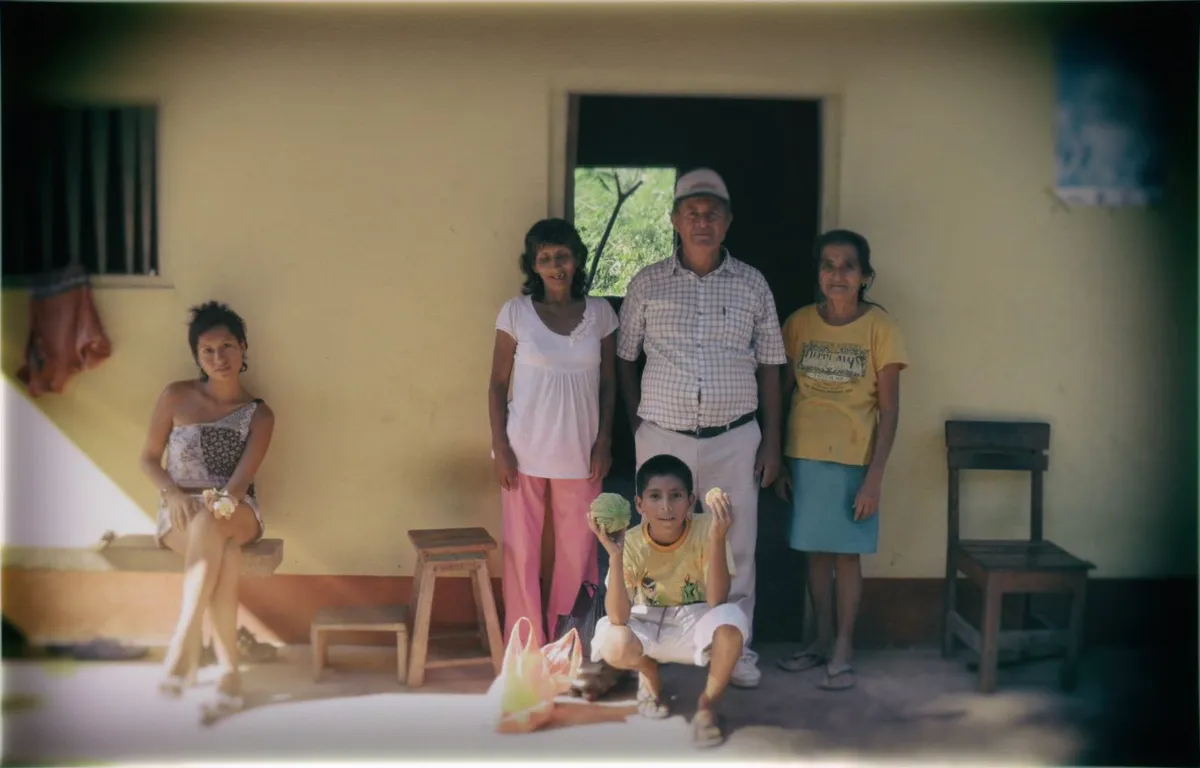
A Peruvian family in the northern jungle region of Peru. Photo by Tony Dunnell.
Are Peruvians rude?
Peruvians are no ruder than most people. But they do have their quirks, some of which can easily be perceived as rude (or, let’s face it, just are rude). They are pretty useless at queuing — especially old women, who elbow their ways into queues across the nation — which for an Englishman is especially notable. When a Peruvian dials a wrong number, he or she will rarely say something like “Oh, sorry for bothering you.” They just go silent and hang up. Or, and this is really annoying, they’ll call a wrong cellphone number and when you say “Sorry, wrong number” they’ll start interrogating you, thinking you stole the phone. Now that’s rude (and it ties in with the question of trust/distrust, see below).
Are Peruvians religious?
Yes, but Peruvians are arguably not as fervently religious as Brazilians or Argentines when it comes to Catholicism (the dominant religion in all three countries). I say that from my own observations. For me, religious fervor in Peru is not as strong as you might expect — and I put that down to Peru’s history. Despite the best efforts of the Spanish conquistadors and the Catholic Church, the Inca gods and other mythological entities — such as Pachamama and the Apu mountain spirits — are still revered and “active,” even among practicing Catholics. Not only is that pretty cool as religions go, it also dilutes the Catholicism to a certain extent (feel free to disagree with me here — I imagine many people might).
Are Peruvians romantic?
They’re probably more romantic than me. Outwardly and publicly, anyway. How much substance is behind the romantic gestures of Peruvian men is open to debate. Buying chocolates and flowers and teddy bears for your girlfriend is all great and lovely — but not so great and lovely when your two other girlfriends find out.
Are Peruvians trustworthy?
This is potentially the most controversial thing I’ll talk about in this article, but trustworthiness is an issue in Peru. I could probably write a book about this (it’s a complicated and delicate subject), and I don’t want to get mired in details here, but this is an aspect of Peruvian society that many Peruvians acknowledge and accept as true. The trust issue ties in with what is known as la viveza (la viveza peruana or, more widely in South America, la viveza criolla). It’s a way of acting that may include (whether consciously or not and to varying extents) a lack of respect for others, a self-centered outlook, blaming others and avoiding personal responsibility, a lack of moral direction, opportunism and a few other negative characteristics. That’s not to say that every Peruvian lives by the code of la viveza — far from it — but it is very much alive and kicking in Peruvian society.
I asked Dario Alfonso Moscoso Pastor, one of my Peruvian friends in Lima, for his opinion on the trustworthiness issue. His answer:
“In general, yes [Peruvians are trustworthy]. But as an expat, you need to take time to adapt to the sometimes shocking experience about living in Peru. One of the most negative aspects you might find is the so called “viveza criolla”, or taking advantage of others, even if you need to break the rules. Which applies to the chaotic traffic in Lima, for example. The total disregard for rules, not respecting lights and pedestrians, can give you an idea about Peru. But in time, you’ll know how to deal with it, because there will be other Peruvians who’ll help you, eventually. There might be bad Peruvians, but the good ones overwhelm them.”
Why are Peruvians always late?
Timekeeping is certainly not a strong point in Peru. As to why Peruvian are always late, I’m not entirely sure. Is it just a cultural thing, whereby people somehow have come to accept punctuality as some kind of myth, in which case arriving on time is basically an error? I don’t know. Like many stereotypes, it says more about expectations than about individuals: plenty of Peruvians are punctual, especially for work and formal appointments.
What are Peruvians called?
Seriously? The answer is kind of in the question, no? Unless, of course, that’s just a poorly worded way of asking what names are popular among Peruvians (I’m being kind here). In that case: Maria, Jose, Juan, Luis, Carlos and Rosa frequently appear at the top of lists of the most popular names in Peru.
What are ancient Peruvians called?
The cultural periods of pre-Columbian Peru stretch way back, as far as 9500 BC in some charts. During that time, many cultures and civilizations, large and small, have risen and faded. Some of the most notable civilizations include the Norte Chico, Chavín, Moche, Nazca, Wari, Sican, Chimú, Chachapoya, and Inca. There is no single name for ancient Peruvians as a whole.
Why are Peruvians so bad at Dota (and Dota 2)?
Dota and Dota 2 are multiplayer online battle arena (MOBA) video games. I don’t know much about them, so I asked a friend who has a fair bit of experience (he told me “I used to play six hours every day for a year. I still suck at it though”). According to him, Peruvians are so notoriously bad at Dota that the words “Peruvian” and “Peru” are used among the Dota community to refer to anyone — Peruvian or not — who’s bad at the game. It’s a gaming-community stereotype, not a fact about Peruvian players.