
If you’re deciding where to travel in 2026 and wondering whether Peru is about to be overrun, the short answer is no. As of mid-2026, the country is posting solid but unspectacular visitor numbers, still climbing back toward its pre-pandemic high rather than breaking records. Around 1.37 million international travelers arrived in the first five months of the year, barely ahead of the same period in 2025 and only about three-quarters of what Peru saw in early 2019. Set that against the destinations dominating this year’s headlines, places like Vietnam and El Salvador posting double-digit or record-breaking growth, and Peru starts to look less like a bandwagon and more like a steady, uncrowded bet.
Where Peru’s tourism stands in 2026
The most recent official figures tell a clear story. According to Peru’s Ministry of Foreign Trade and Tourism (Mincetur), the country received roughly 1.37 million international visitors between January and May 2026, up just 0.6% on the same stretch of 2025. The first quarter alone was a little stronger, up around 3.5% year on year, but the pace has been modest all year. Mincetur publishes the running totals on its datosturismo portal, which updates as new months come in.
Where do the visitors come from? Overwhelmingly the neighborhood. About half of all arrivals, roughly 50%, come from elsewhere in South America. Chile is comfortably the biggest single market (around 303,000 visitors so far this year, or about 22% of the total), followed by the United States (about 255,000, or 19%) and Ecuador (around 114,000). Bolivia, Colombia and Brazil round out the top six. Europe accounts for roughly 17% of arrivals and Asia only about 5%, which is worth remembering if you picture Machu Picchu as wall-to-wall long-haul tourists: most visitors are regional, and plenty arrive overland.
Almost everyone still comes through Lima. Jorge Chávez International Airport handled around 64% of all international entries in the first five months of the year, a reminder of how central the capital remains as a gateway even for travelers whose real target is Cusco.
Still short of the pre-pandemic peak
Here is the context the headline growth figures tend to miss. Peru’s record year was 2019, when it drew somewhere around 4.4 million international arrivals. Then the pandemic flattened everything. The rebound since has been real but uneven: arrivals climbed back to about 3.26 million in 2024, a jump of nearly 30% over 2023, and finished 2025 somewhere in the region of 3.6 million.
By that measure, 2026 is less a boom than a plateau. Mincetur’s own comparison puts arrivals in the first five months of 2026 at about 75% of the same period in 2019. In other words, more than six years on, Peru is still running roughly a quarter below its high-water mark, and this year’s slim 0.6% uptick suggests the fast part of the recovery is behind us for now. The government has set a more optimistic target of around 4.4 million for the full year, which would finally match pre-pandemic levels, but on the current trajectory that looks ambitious rather than likely.
None of this is a crisis. It is a steady return, not a stampede.
How Peru compares to the world’s fastest growers
Zoom out and Peru’s story looks even more measured. Global travel is still growing: UN Tourism reported that worldwide arrivals rose about 4% in 2025 and another 2% or so in the first quarter of 2026, with roughly 307 million trips taken in those three months. Peru’s low-single-digit growth is trailing even that global average.
The genuine standouts are in another league. Among the fastest-growing destinations in early 2026, UN Tourism flagged places like Paraguay (up around 46%) and El Salvador (up around 43%), the latter riding a dramatic turnaround in its safety reputation. Japan has been setting arrival records on the back of a weak yen. And in Southeast Asia, Vietnam, which drew nearly 12.3 million international visitors in the first half of 2026, up almost 15% year on year, posted the strongest six months in its history. To put that in perspective, Vietnam took in more visitors in six months than Peru is likely to see all year.
That gap is not a verdict on which country makes the better trip. It mostly reflects geography, flight connectivity and price: Vietnam sits in the middle of the world’s most populous travel region, while Peru is a long, often expensive haul from almost everywhere except its neighbors. But it does mean something practical for you as a traveler.
What the numbers mean for your trip
A few takeaways, if you are weighing Peru for 2026:
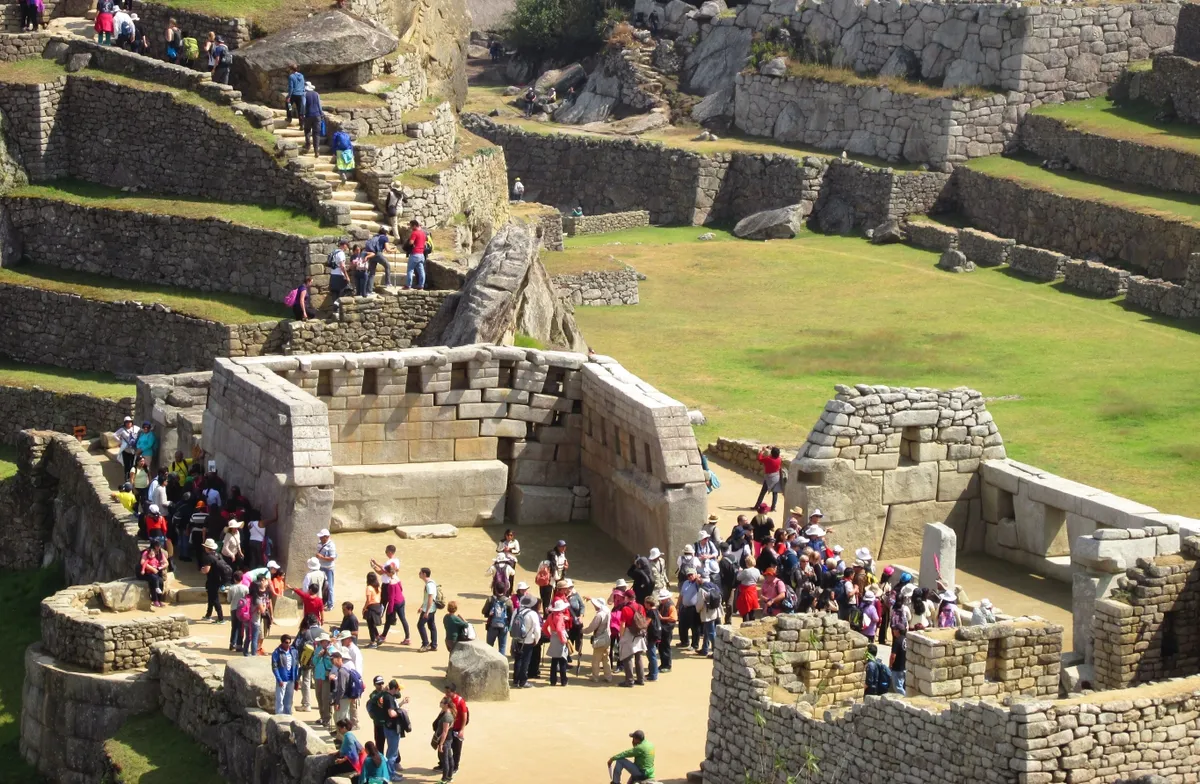
Peru is not an overtourism story, but its highlights are. The country as a whole is quieter than its record-breaking rivals, and huge swaths of it (the north coast, the Amazon, the highlands beyond Cusco) see very few foreign visitors. The crowds concentrate at a handful of icons: Machu Picchu, Cusco, the Sacred Valley and, increasingly, Rainbow Mountain. If your itinerary is only those places in July and August, it will feel busy regardless of the national numbers.
Book the capped attractions early, but for a different reason than you might think. The pressure at Machu Picchu is not really about total visitor volume; it is about daily ticket limits and, for the Inca Trail, a strict permit cap that sells out months ahead for the dry season. So even in a flat year, lock in your Machu Picchu entrance and any trek permits well in advance for June through August. Most other things (buses, hotels, day tours) you can usually arrange much closer to your dates.
Use the shoulder seasons. Because the crush is seasonal rather than year-round, the value in 2026 is in the shoulder months. April to May and September to October tend to offer reasonable weather with noticeably thinner crowds than the mid-year peak. If your dates are flexible, that is the sweet spot. Our guide to the best time to visit Machu Picchu has the month-by-month detail.
Give yourself enough time. Peru is big, and the distances between its highlights are longer than most first-timers expect. If you are not sure how to structure a trip, start with how many days you need in Peru, then dig into the Cusco, Lima and Puno guides.
The bottom line: 2026 is a good year to come to Peru precisely because it is not having a blockbuster one. You get the same extraordinary sites without the record-setting scrum that some of the world’s hottest destinations are now wrestling with.
Frequently asked questions
How many tourists visit Peru in 2026?
Around 1.37 million international visitors arrived in the first five months of 2026, according to Mincetur, up about 0.6% on the same period in 2025. On the current pace Peru looks set to finish the year somewhere in the high three millions, though the government has floated a more optimistic target of up to 4.4 million.
Has Peru’s tourism recovered to pre-pandemic levels?
Not quite. Arrivals in early 2026 were running at roughly 75% of the same period in 2019, Peru’s record year of around 4.4 million visitors. The sector rebounded strongly in 2024 but has largely plateaued since, so as of mid-2026 it remains about a quarter below its peak.
Which countries send the most tourists to Peru?
Chile is the largest single market (about 22% of arrivals in 2026 so far), followed by the United States (about 19%) and Ecuador. Roughly half of all visitors come from within South America, with Europe adding around 17% and Asia about 5%.
Is Peru more or less crowded than other top destinations in 2026?
Less, at a national level. While destinations like Vietnam and Japan are setting all-time arrival records, Peru’s numbers are growing only slightly and sit below its own 2019 high. The catch is that Peru’s crowds concentrate heavily at a few marquee sites, so Machu Picchu and Cusco can still feel packed in peak season even when the country overall is not.
When is the best time to visit Peru to avoid crowds?
The shoulder seasons, roughly April to May and September to October, generally offer decent weather with fewer tourists than the June-to-August peak. The dry winter months are the busiest, especially around Cusco and Machu Picchu.
How far in advance should I book Machu Picchu and the Inca Trail?
For travel between June and August, book your Machu Picchu entrance ticket and any Inca Trail permits several months ahead. Those caps are fixed daily limits and sell out well before the destination itself feels full, independent of Peru’s overall visitor numbers.
How does Peru’s tourism compare to Vietnam’s?
It is a different scale. Vietnam drew close to 12.3 million international visitors in just the first half of 2026, more than Peru is likely to receive in the entire year. Vietnam benefits from sitting in the world’s busiest travel region and from cheaper, shorter flights for most Asian travelers, whereas Peru is a longer, pricier trip for almost everyone outside South America.