
FlixBus is one of the biggest names in long-distance coach travel, and since late September 2026 the bright green brand has finally arrived in Peru. If you know it from Europe, Brazil or the US, you might expect a cheap, app-first, everywhere-at-once network. That’s not what has launched. Three weeks in, FlixBus Peru is one route, two buses and a local operator you’ve probably never heard of. Here’s what’s actually on offer, who you’re really travelling with, what it costs, and the long list of things nobody can tell you yet.
FlixBus Peru at a Glance
- Launched: 25 September 2026 (Infobae, FlixBus).
- Route: Lima–Chimbote–Trujillo, both directions. That’s the whole network.
- Operator: Pominpro, part of Grupo Polo, runs the buses under its own permit.
- Fleet: two buses at launch, reportedly one daily departure (RPP).
- Fares: launch promo from S/5 (now expired); reported to start from S/30 afterwards, with dynamic pricing.
- Booking: flixbus.pe and the FlixBus app, with terminal counters promised.
Who Actually Runs the Bus?
This is the single most important thing to understand before you book. FlixBus doesn’t own buses in Peru, and it doesn’t hold the operating licence either. It runs what it calls an asset-light model: the company provides the brand, website, app, payments, dynamic pricing, live bus tracking and customer service, while a local partner provides everything with wheels.
In Peru that partner is Pominpro (Polo Minería y Proyectos S.A.C.), part of Grupo Polo, a group that says it has more than 600 buses in Lima and nearly two decades in urban and private passenger transport (Gestión). Lima–Trujillo is its first regular interprovincial passenger route. According to Infobae, the ticket revenue goes to Pominpro and FlixBus is paid for its services; FlixBus’s vice-president for Iberia and South America, Pablo Pastega, put it plainly: “La ruta es de Pominpro y ellos son quienes emiten el billete” (the route is Pominpro’s, and they issue the ticket).
The Ministry of Transport (MTC) backs that reading. It authorised Pominpro, not FlixBus, to run the route, and told El Comercio that it doesn’t authorise brands; ticket-selling platforms don’t need an MTC permit at all. FlixBus had tried to get its own Lima–Ica route approved in late 2025, but the MTC declared that application inadmissible in November 2025 (RPP).
Peru’s established bus companies are not happy about the arrangement. The interprovincial operators’ guild Cotrap-Apoip has asked the MTC, Congress and consumer agency Indecopi to clarify who answers to passengers for accidents, lost luggage, delays, cancellations and refunds, and insists travellers should know which company is actually carrying them before they pay. Pominpro’s answer, via its business manager Faber Toro, is that Pominpro holds the permit and so it handles complaints and contingencies; FlixBus says it backs that up with a 24/7 crisis center.
What this means for you: the company on your ticket and the company driving your bus are different. If something goes wrong, the legally responsible carrier is Pominpro. Keep that name handy, alongside your FlixBus booking reference.
Routes, Stops and Timetable
There’s just one line: Lima–Chimbote–Trujillo, with all six combinations sold (Lima–Chimbote, Chimbote–Trujillo and so on). FlixBus’s own Peru site lists the stops as:
- Lima: Terminal Terrestre Plaza Los Olivos, Av. Alfredo Mendiola 6068, Los Olivos.
- Trujillo: Terminal Terrestre (Terrapuerto Trujillo), Panamericana Norte Km 558.
- Chimbote: listed on route pages, but no stop address was published when we checked.
The Lima stop is the one to think about. Los Olivos is in the far north of the city, a long way from Miraflores, Barranco or the historic center, and Lima traffic is unforgiving. Budget generously for the taxi ride and treat any timing you’re quoted as optimistic.
FlixBus hasn’t published a scheduled journey time on its Peru route pages. Lima to Trujillo is roughly 560 km up the Panamericana Norte, and the established operators typically take around eight to nine hours. Check the exact departure and arrival times in the app when you book.
What it doesn’t serve: anything in the south. No Paracas, no Huacachina or Ica, no Nazca, Arequipa, Puno or Cusco. FlixBus says it is in talks with Grupo Polo and other partners about new routes “muy pronto”, but each one needs its own MTC authorisation, and no dates or destinations have been announced.
Prices and Booking
FlixBus uses the dynamic pricing it’s known for elsewhere: Gestión reports the system can set up to 100 different prices for the same route and bus over the sales period. Cheap seats go first, so booking early pays.
- Launch promo: from S/5 to Chimbote or Trujillo, for purchases until 8 October and travel until 16 October 2026. That offer is over, although the site was still showing a “from S/5” banner when we checked.
- Standard fares: reported to start from S/30 after the promo (Infobae). No average fare has been disclosed, so expect busier dates to cost noticeably more.
- Booking channels: flixbus.pe and the FlixBus app, where you can also change tickets and request refunds. Pominpro counters at the Lima, Chimbote and Trujillo terminals were announced to follow.
- Luggage: one carry-on plus one bag in the hold, per FlixBus’s Peru site. Check the size and weight limits on your booking, as they aren’t spelled out on the route pages.
For travellers who don’t speak Spanish, the app is a genuine plus: online booking, e-tickets and live bus tracking are things many Peruvian operators still don’t do well.
On Board: Bus and Safety Kit
Pominpro’s coaches are 2022 Scania K 360 chassis with Modasa Zeus 360 bodywork, and the safety spec on paper is good (PressPeru, T21): electronic and anti-lock braking, stability and traction control, a retarder for long descents, a driver-fatigue sensor, cameras in the cab, cabin and luggage holds, lane-departure and proximity warnings, tyre-pressure monitoring and smoke sensors. A second GPS unit sits on top of the one Peruvian regulation already requires, and FlixBus’s South American traffic control center monitors trips around the clock.
Comfort is less clear. FlixBus’s Peru site promises extra legroom, power sockets and toilets. A Gestión blogger who joined a FlixBus trip simulation with a full emergency drill, Juan Pablo Robles, found no seat-back screens and no Wi-Fi, an air-conditioning setting cold enough that other guests complained, and a no-pets policy. He was impressed by the emergency drill, though. Grupo Polo has also said it is buying double-decker buses for the route, so the bus you get may change.
Safety Record and Licensing
The bus hardware is modern; the operator’s record is mixed. El Comercio reported that Sutran, Peru’s road-transport regulator, has recorded more than 100 infractions against Pominpro’s vehicles, the most recent in September 2026 for operating without SOAT, Peru’s mandatory accident insurance. Grupo Polo’s president, Polo Pérez, acknowledged “algunas falencias y sanciones” (some shortcomings and penalties) but said the company has had no incapacitating accidents. There’s no public breakdown of which vehicles or services those infractions relate to, and no safety record yet for the Lima–Trujillo service itself.
You can check any Peruvian operator’s record on Sutran’s public platforms yourself, and it’s worth doing for any bus company, not only this one.
What Passengers Are Saying (and What We Don’t Know Yet)
Honestly: almost nothing yet. At the time of writing, the Peru service has run for just over three weeks on two buses, and we couldn’t find a body of independent passenger reviews to judge it by. Anyone telling you FlixBus Peru is great or terrible is guessing.
What does exist is FlixBus’s global record. On Trustpilot, FlixBus scored 2.4 out of 5 (“Poor”) across roughly 18,300 reviews in October 2026, with opinion sharply split: about 46% one-star and 35% five-star. The recurring complaints are delays and cancellations, hard-to-reach customer support, and refunds paid as vouchers rather than cash. Those reviews are about FlixBus’s partners in other countries, not Pominpro, so they tell you about the platform and its support systems more than about this bus.
Still unknown:
- Real-world punctuality on the Lima–Trujillo run.
- How refunds, cancellations and lost luggage are handled in practice, given the split between FlixBus and Pominpro.
- Whether the onboard amenities listed on the website match what’s on the bus.
- When, or whether, routes to the south or the highlands will arrive.
How It Compares
For Lima to Trujillo, FlixBus competes with long-established northern-route operators. For the classic southern circuit, it doesn’t compete at all yet.
| Operator | Who runs the bus | Lima–Trujillo? | Network | Track record | Best for |
|---|---|---|---|---|---|
| FlixBus | Pominpro (Grupo Polo) under its own MTC permit; FlixBus sells the tickets | Yes, from Los Olivos | One route: Lima–Chimbote–Trujillo | Weeks old; no Peru reviews yet; operator has 100+ Sutran infractions on record | Cheap early-booked fares to Trujillo if you’re happy to be an early adopter |
| Cruz del Sur | Itself | Yes | Nationwide, plus some cross-border routes | Comfortable coaches and solid safety; handles disruption badly | Comfortable overnight hauls between major cities |
| Oltursa | Itself | Yes | Coast and south | Comfortable VIP cama class; delay and hygiene complaints | Big-city overnights in the top seat class |
| Civa | Itself | Yes | 60-plus cities | Cheap and everywhere; inconsistent | Budget travel to places premium lines skip |
| Peru Hop | Itself (hop-on hop-off) | No (southern Peru only) | Lima–Paracas–Huacachina–Nazca–Arequipa–Puno–Cusco | Consistently strong reviews; pricier than a terminal-to-terminal ticket | First-timers doing the southern circuit at their own pace |
If you’re heading to Paracas, Huacachina or Cusco, FlixBus simply isn’t an option. Peru Hop covers that corridor with hotel pickups, or you can book a conventional operator terminal to terminal. If you’re going north to Trujillo for Chan Chan and Huanchaco, FlixBus is a real alternative now, but Cruz del Sur, Oltursa and Civa all have years of history on that road. For the full field, see our Peru company reviews.
Booking Tips
- Book early. Dynamic pricing rewards it; the cheapest seats go first.
- Note the operator. Your carrier is Pominpro. Screenshot your booking and keep both names for any complaint.
- Allow a lot of time for Los Olivos. It’s far from the tourist districts; don’t cut it fine in rush-hour traffic.
- Keep connections loose. With no punctuality record yet, don’t stack a flight or tour tightly behind a FlixBus arrival.
- Check the bus details. Confirm luggage limits, departure terminal and amenities in the app before you travel, since the service is still settling in.
The Verdict
FlixBus Peru isn’t the national network the brand might lead you to expect. It’s a single north-coast route run by a local company under its own licence, with a slick international booking app on top. The app, live tracking and early-booking prices are genuine advantages, and the buses carry better-than-average safety technology. Against that: no passenger track record, an operator with a long Sutran infraction history, an inconvenient Lima terminal, and unresolved questions about who will make things right when a trip goes wrong.
If you’re heading to Trujillo, you’re flexible and you find a cheap fare, it’s a reasonable gamble, and we’ll update this review as real passenger experience builds up. If you’re doing the southern circuit, it doesn’t apply to you yet; stick with the operators that actually run there.
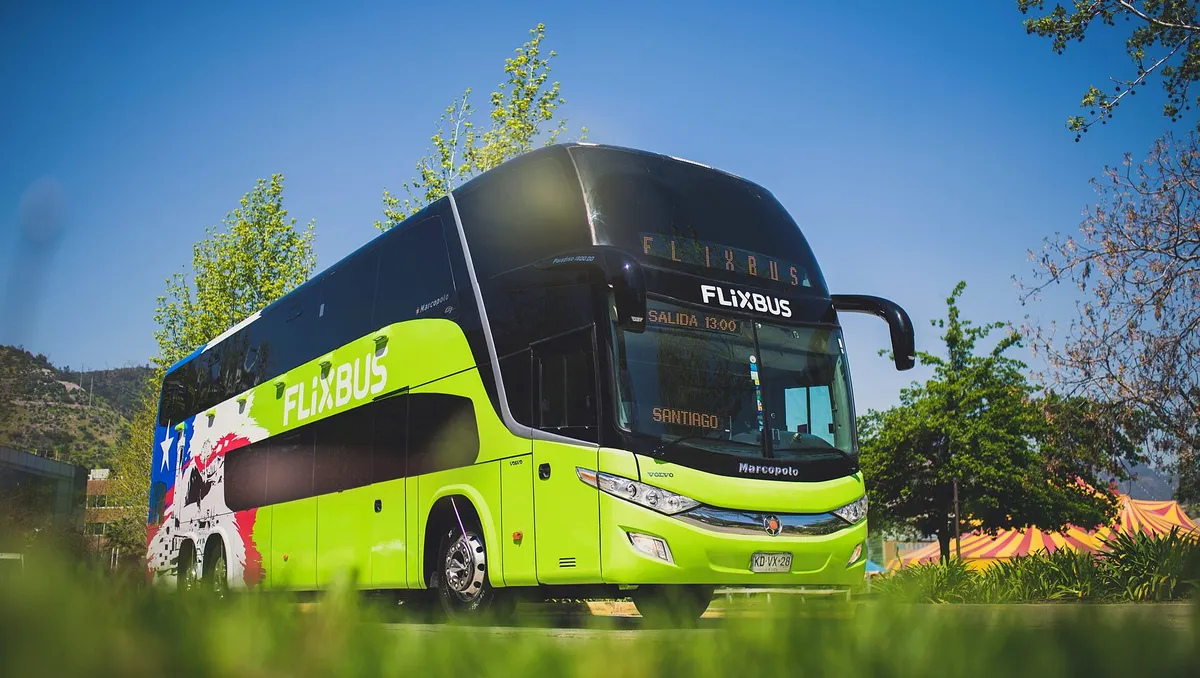
Hero photo: FlixBus Chile launch coach, by Hemeroterca via Wikimedia Commons, licensed CC BY-SA 4.0.